American Impressionism
1880 – 1920
Cassatt's mothers and color prints, Hassam's flag-hung avenues and the quiet Connecticut farms of the Ten - American painters who took up Impressionist light, 1880-1920
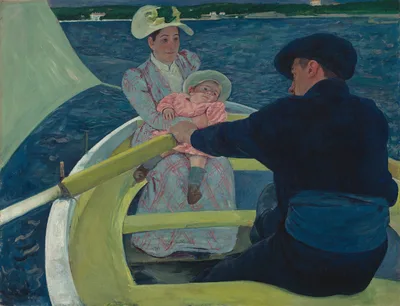 The Boating Party, 1893
Signature Work
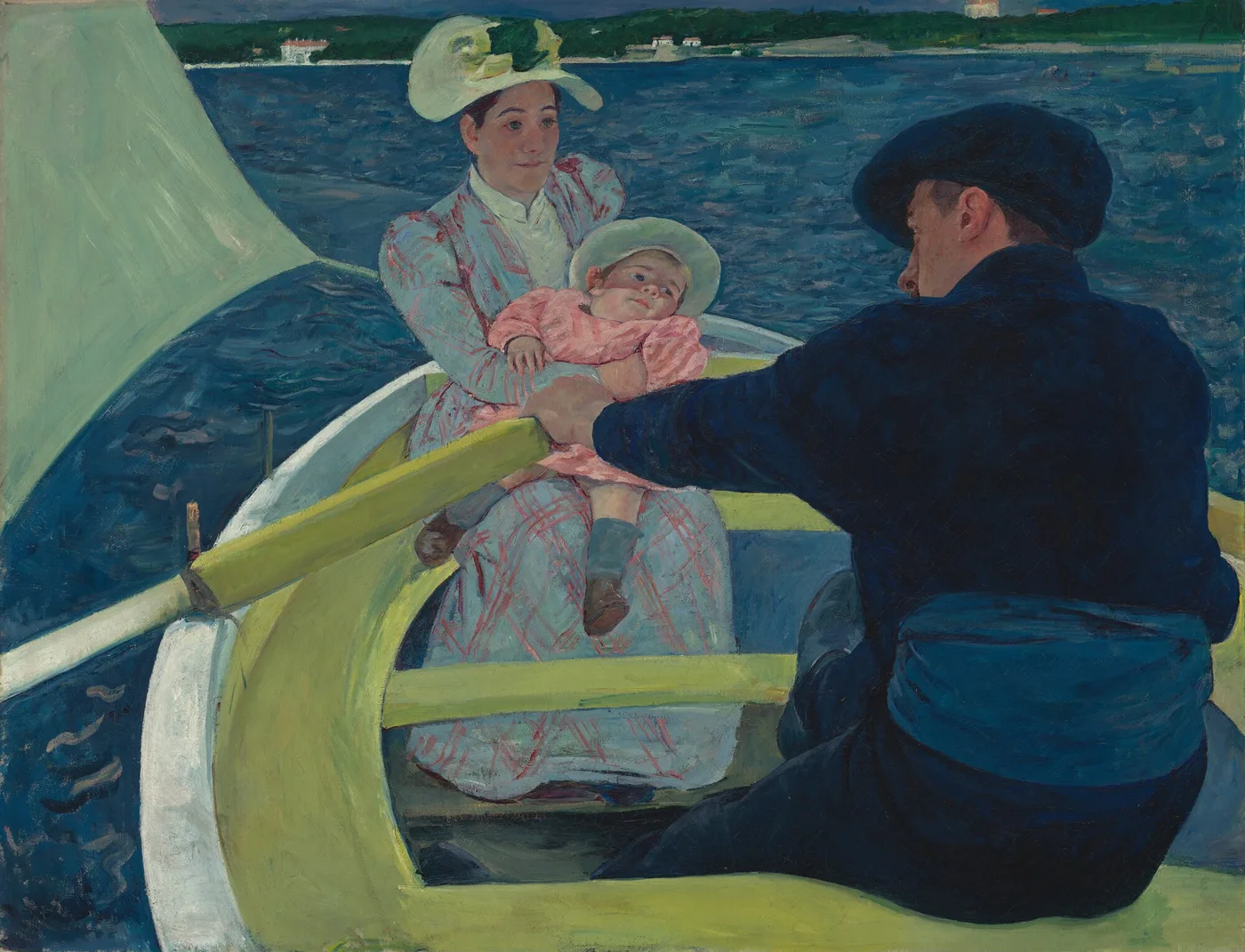
The Boating Party, 1893
oil on canvas; Chester Dale Collection
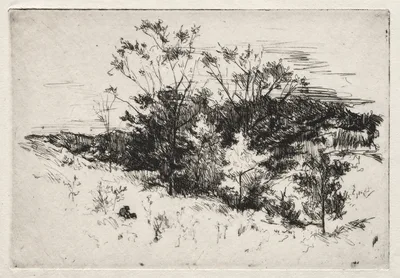
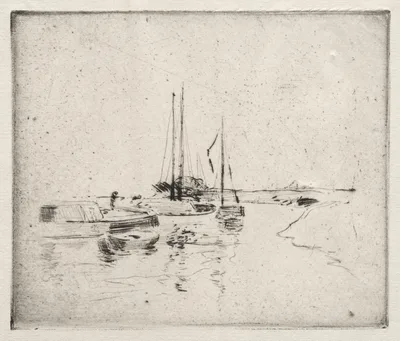
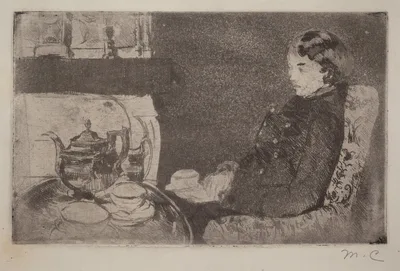
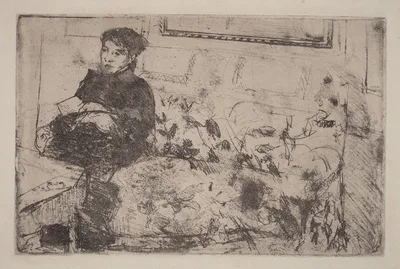
American Impressionism was never a single school with a program. It was a shared change of habit among American painters, most of them trained in Paris or Munich in the 1870s, who over the following two decades lightened their palettes, broke up their brushwork and turned to everyday modern subjects: a mother bathing a child, a sunny New England pasture, a crowded avenue in New York. The works in this archive span that shift, from Mary Cassatt's Paris interiors of the late 1870s and John Henry Twachtman's early etchings made around Cincinnati, through the Connecticut art colonies of the 1890s, to the etchings and lithographs Childe Hassam made from 1915 onward.
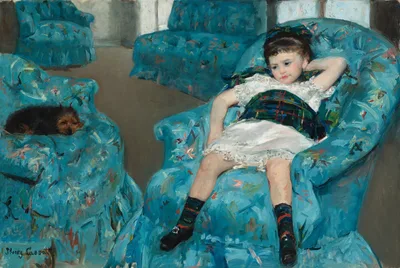
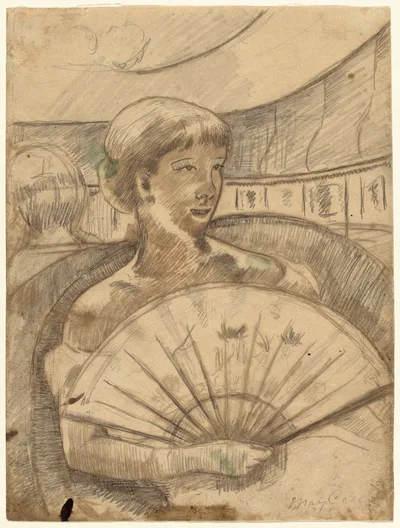
Its first and most direct link to French Impressionism was Mary Cassatt (1844-1926). Born in Allegheny, Pennsylvania, she went to Paris in 1866 and had a painting accepted by the Salon jury for the first time in 1868. After both of her Salon entries were rejected in 1877, Edgar Degas invited her to show with the Impressionists. She exhibited with them in 1879, 1880, 1881 and 1886 - the only American to do so - and showed eleven works in the 1879 exhibition. Her friendship with Degas left marks on her pictures; in a letter to the dealer Ambroise Vollard, Cassatt wrote that Degas had advised her on Little Girl in a Blue Armchair (1878) and had even worked on its background, a contribution the National Gallery of Art's conservators have confirmed with infrared imaging.
In April 1886 the Paris dealer Paul Durand-Ruel brought about three hundred Impressionist pictures to New York for an exhibition presented by the American Art Association; Cassatt lent two paintings. Durand-Ruel later said that the two New York exhibitions of 1886 saved him from ruin, and in 1887 he opened his first permanent gallery in the United States. For American painters the shows were a turning point: the 1886 show may have sparked William Merritt Chase's turn toward outdoor landscape.
At the same time, American painters were going to Giverny, the Normandy village where Claude Monet lived. Willard Metcalf was painting there by 1886, and Theodore Robinson (1852-1896), who returned to France in 1884, had moved in next door to Monet by 1888. Robinson's 1892 view of the Seine valley from the hills above Giverny is in this archive. He left France for the last time that year and died in New York in 1896, having written to Monet that February about coming back to Giverny.
In late 1897 Hassam, Weir and Twachtman led a secession from the Society of American Artists, which they found hostile to their Impressionist manner. With Frank Benson, Joseph DeCamp, Thomas Wilmer Dewing, Willard Metcalf, Robert Reid, Edward Simmons and Edmund Tarbell they formed the Ten American Painters, whose first exhibition opened at the Durand-Ruel galleries in New York in March 1898. After Twachtman died in Gloucester, Massachusetts, in August 1902, Chase took his place. The Ten exhibited together for about twenty years.
Much of the movement's work was done in summer colonies. Twachtman settled in Greenwich, Connecticut, in 1889, bought a farm there in 1890 and probably that year began summer classes at nearby Cos Cob, where visitors boarded at the Holley House; Weir taught with him in 1892 and 1893, and Hassam joked about "the Cos Cob Clapboard School of Art." Weir himself had acquired a 153-acre farm at Branchville, Connecticut, in 1882 in exchange for a painting and ten dollars. In Old Lyme, Henry Ward Ranger began bringing painters to Florence Griswold's boarding house in 1899-1900; Hassam arrived in 1903, and Metcalf, who stayed there between 1905 and 1907, painted the house by night in May Night (1906). On eastern Long Island, Chase ran the Shinnecock Hills Summer School of Art from 1891 to 1902.
The movement's last great public statement came in wartime. Beginning in 1916, after a Preparedness Parade on Fifth Avenue, Hassam painted about thirty pictures of flag-hung New York streets. Allies Day, May 1917, in this archive, records the Avenue decked with American, British and French flags after the United States entered the First World War. By then the Armory Show of 1913 - in which Hassam himself showed six paintings - had made Impressionism look like the old guard rather than the avant-garde.
"It changed my life. I saw art then as I wanted to see it."
— American Impressionism